Three-Day Summer Camp “I Want More” Held at the Faculty of Natural Sciences and Mathematics
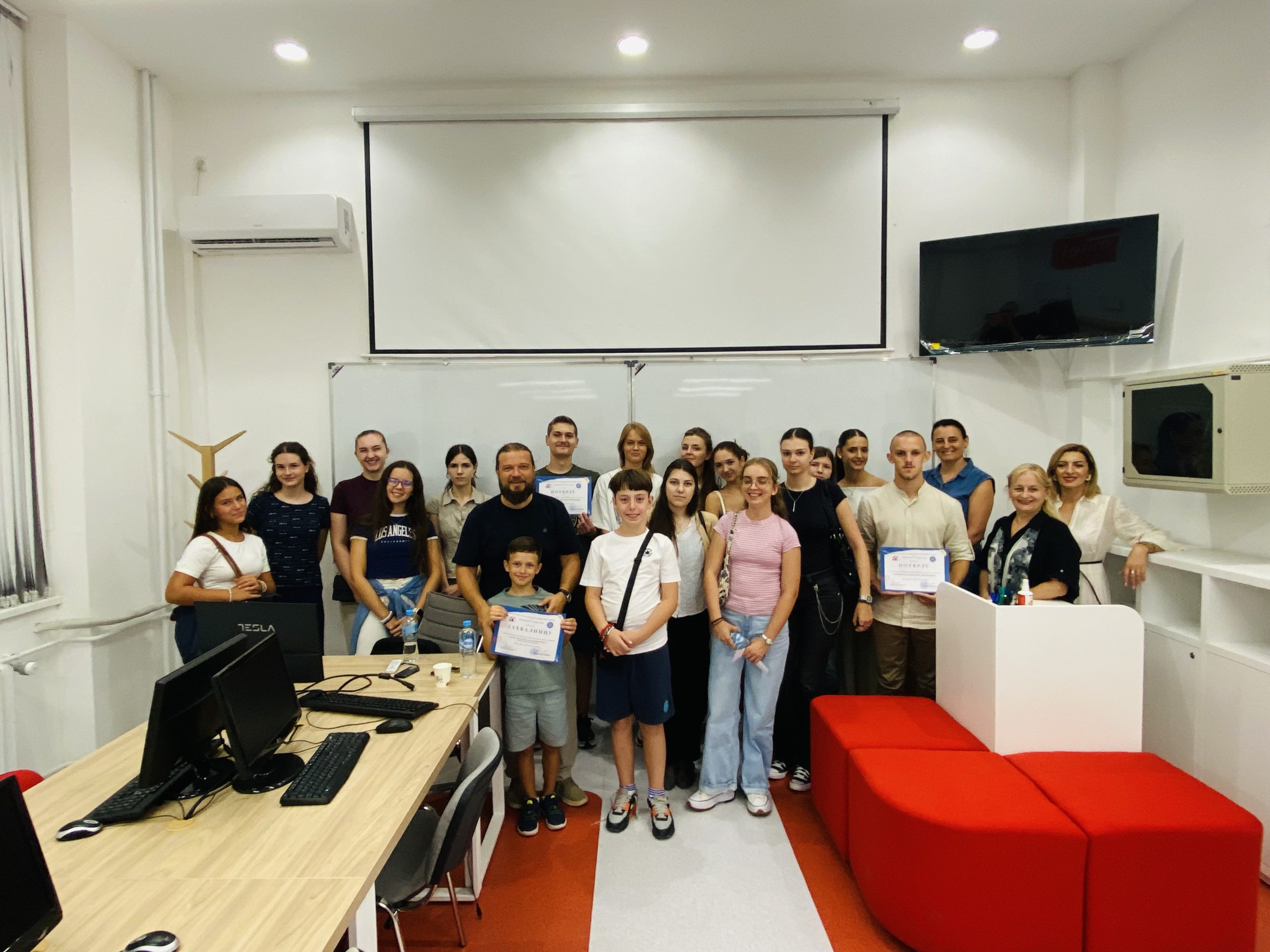
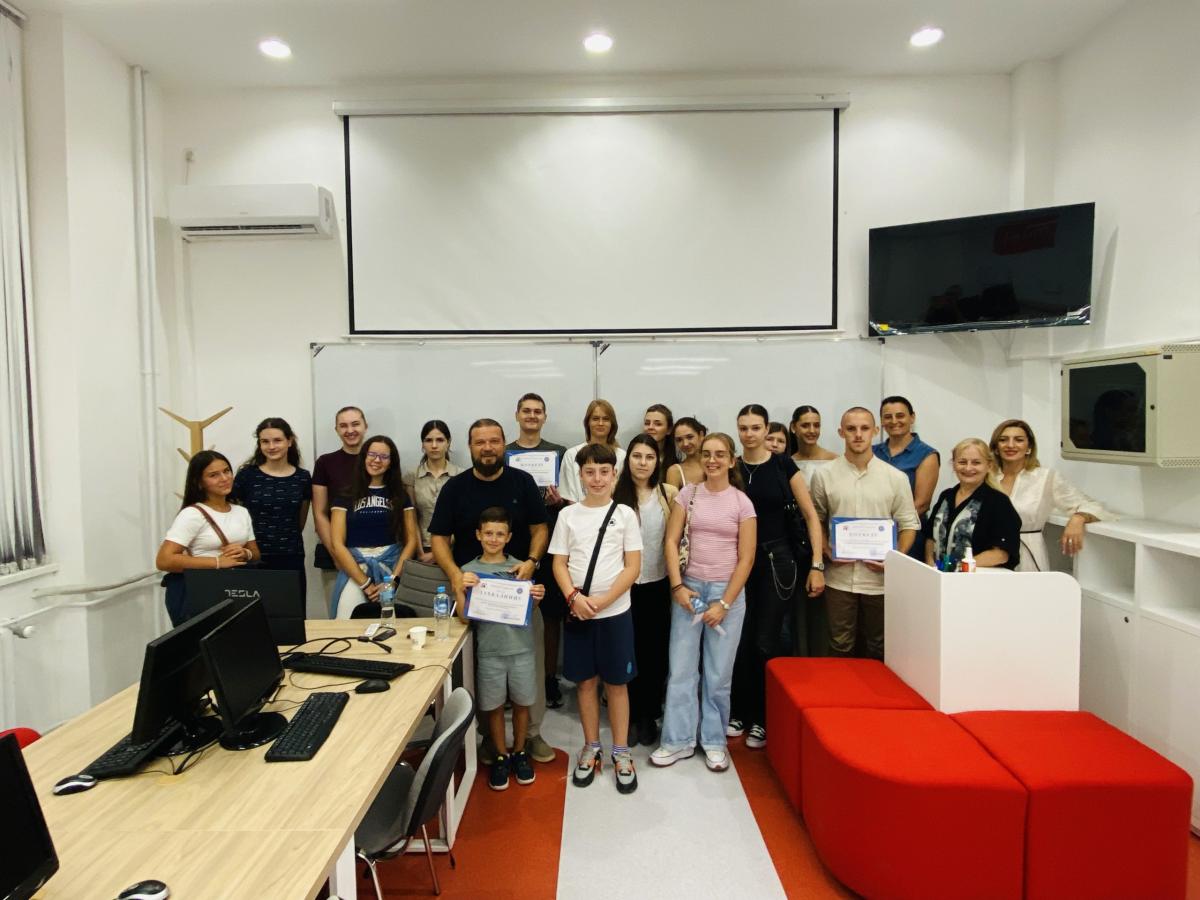
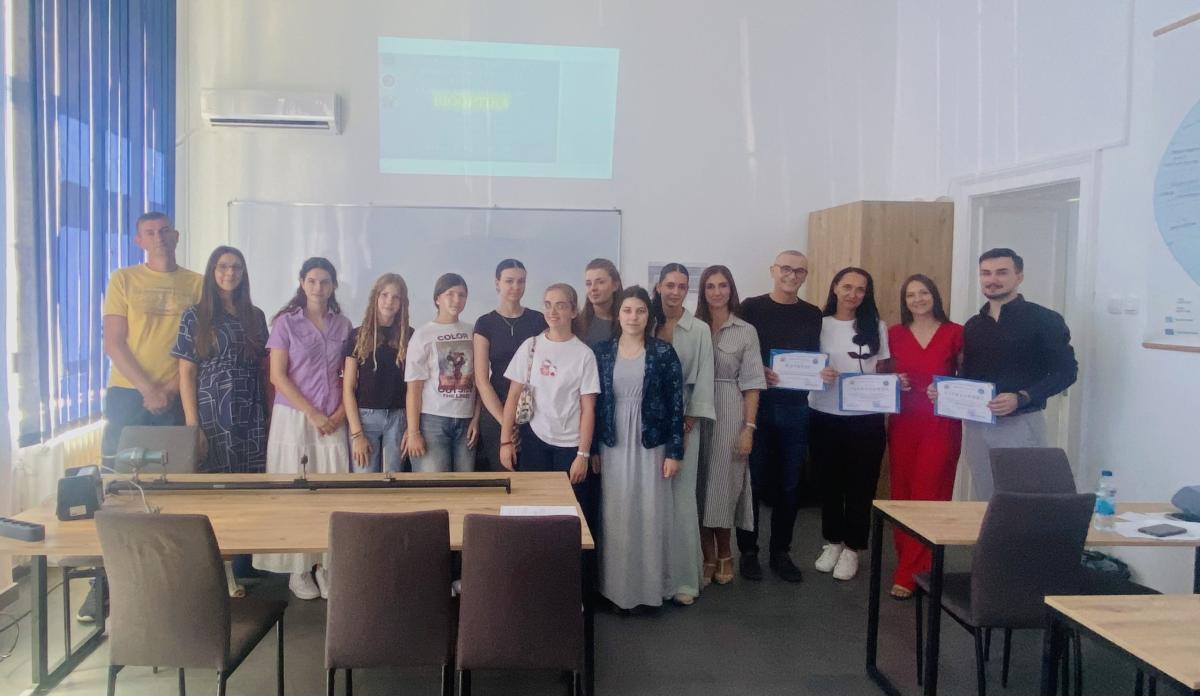
The three-day summer camp “I Want More”, organized in cooperation between the University of Banja Luka and the Republic Pedagogical Institute of the Republic of Srpska, brought together a large number of interested students and teachers, who had the opportunity to explore the world of natural sciences through engaging, practical, and interactive workshops. During the three-day programme, camp activities were held at several organizational units of the University of Banja Luka, while the Faculty of Natural Sciences and Mathematics hosted the official opening of the camp and one of its richest programme segments. Seven engaging and well-attended workshops in physics, biology, chemistry, and geography were held at the Faculty, giving students and teachers the opportunity to explore different aspects of the natural sciences through experiments, practical work, and interactive activities.
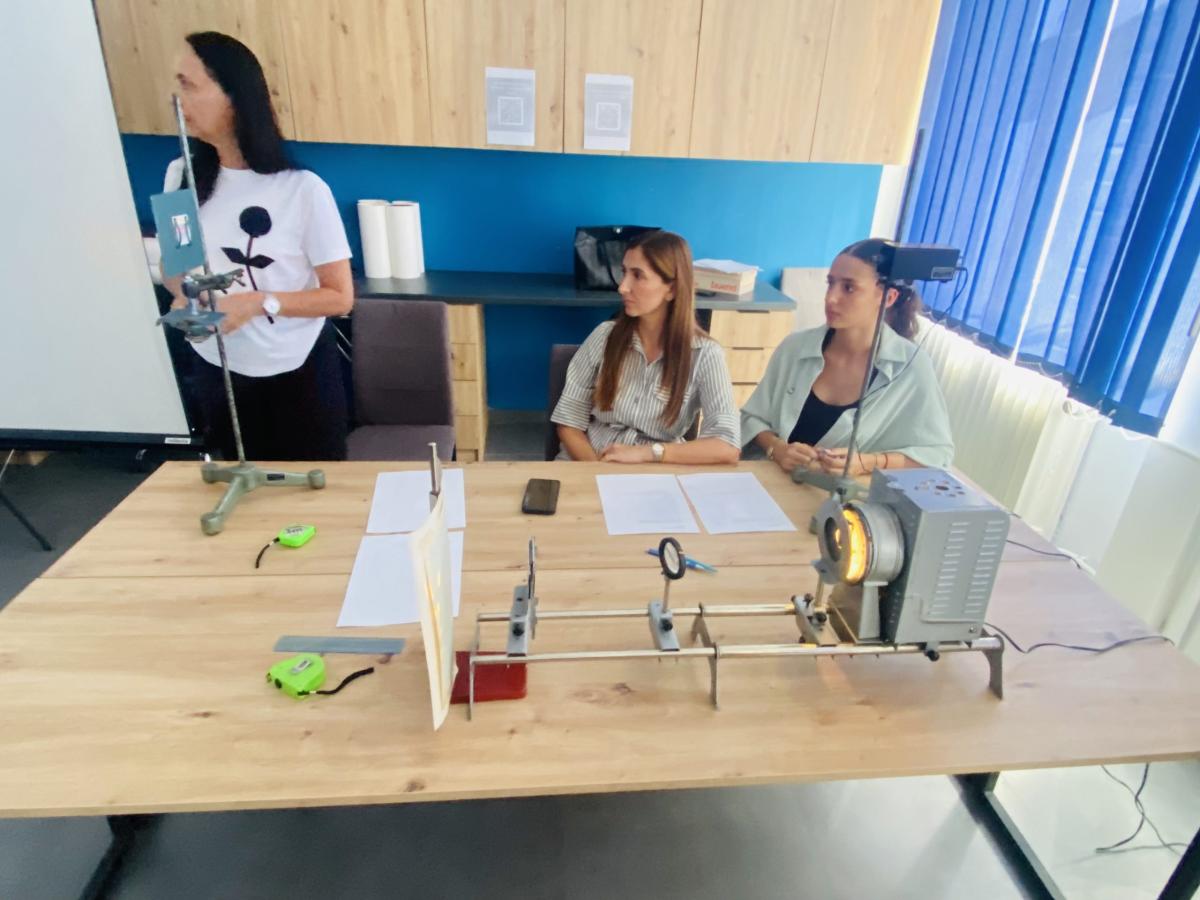
The interdisciplinary workshop “Biooptics”, delivered by Associate Professor Dino Hasanagić, Associate Professor Snježana Dupljanin, and senior teaching assistants Bojan Kovačević, MA, and Jovana Grahovac, MA, brought together knowledge from physics and biology in the study of the human sense of vision. Through engaging experiments and practical activities, participants followed the path of light through the optical system of the eye, from its refraction and the formation of an image to the way photopigments in photoreceptors respond to light and trigger biochemical processes that lead to the generation of a nerve signal.
An interesting combination of biology and chemistry was also offered through the interdisciplinary workshop “Honey Code: The Truth About Honey”, delivered by Professor Dijana Jelić and senior teaching assistants Dragana Gajić, MA, and Tanja Gostić, MA. Through practical work, participants learned more about the biological origin of honey, its composition, and its chemical properties, discovering how biology and chemistry intersect in the study of one of the best-known natural products.
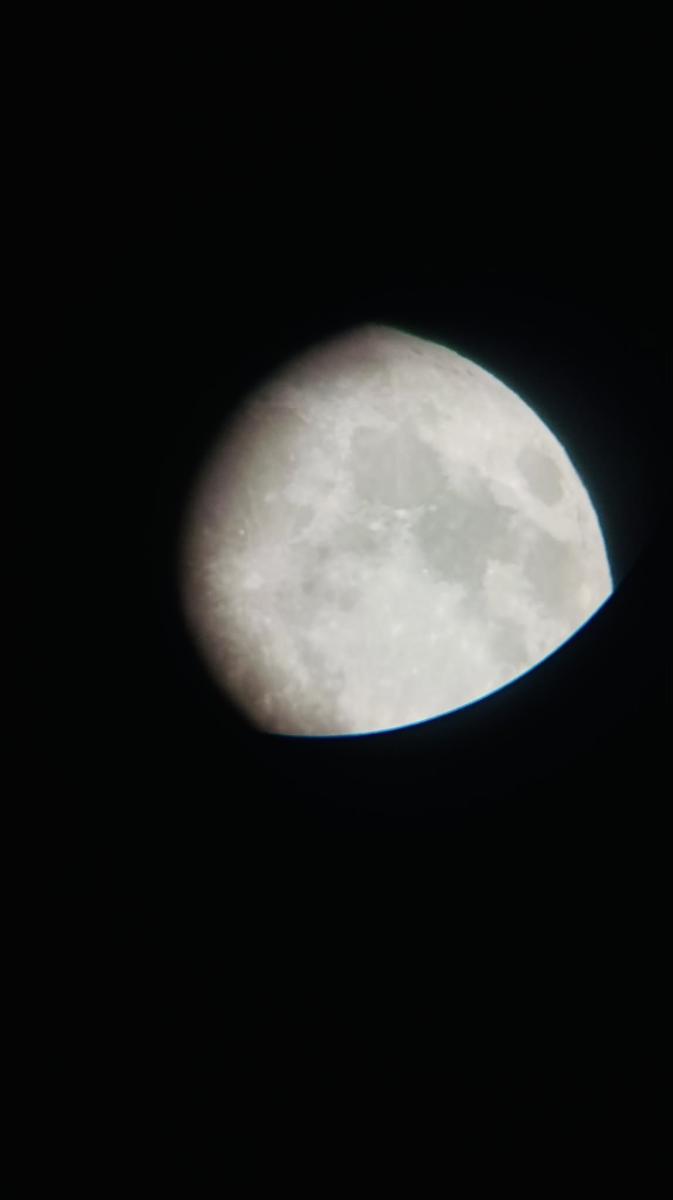
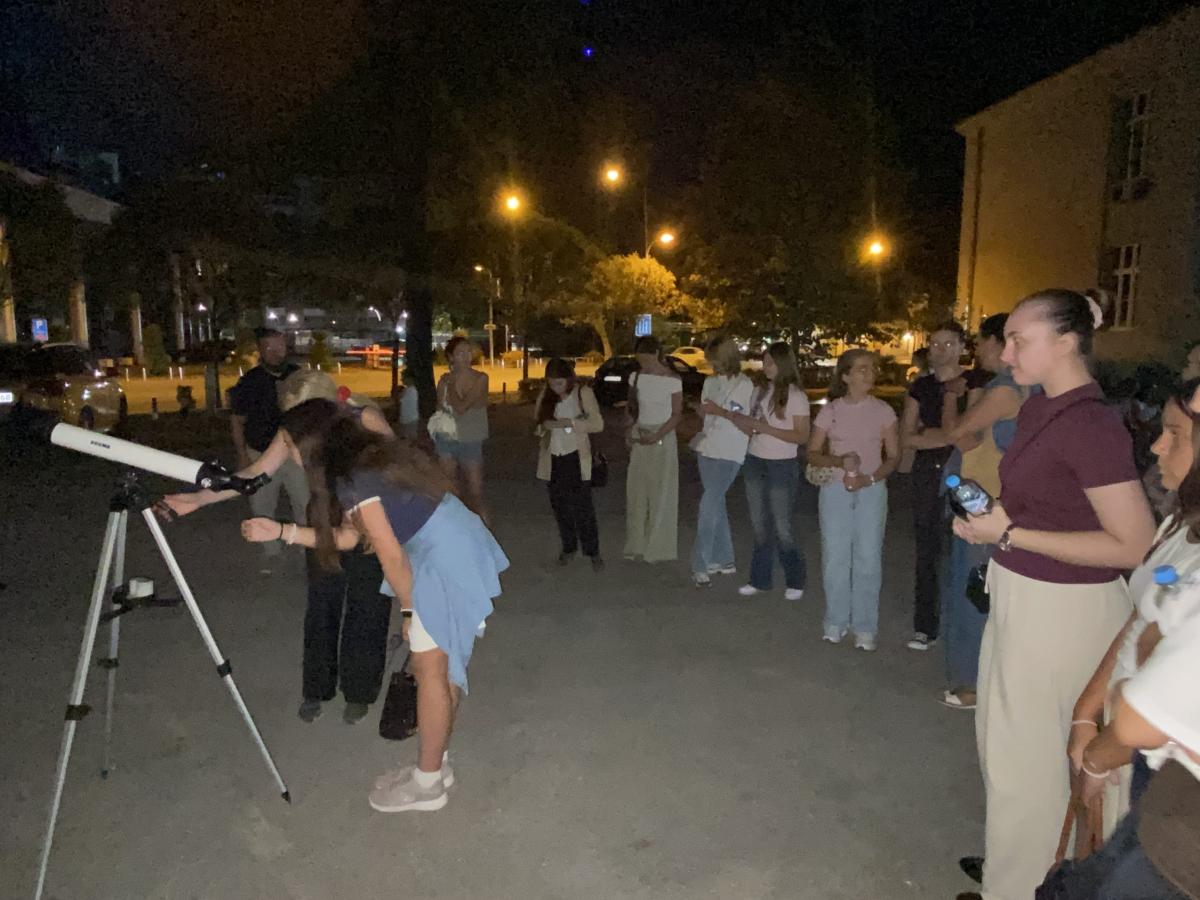
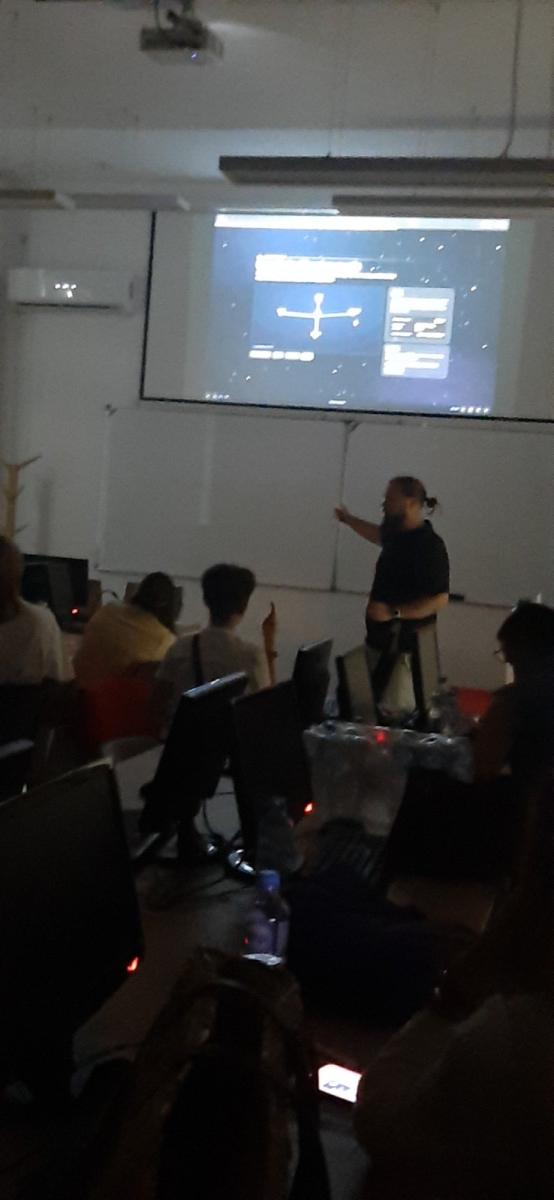
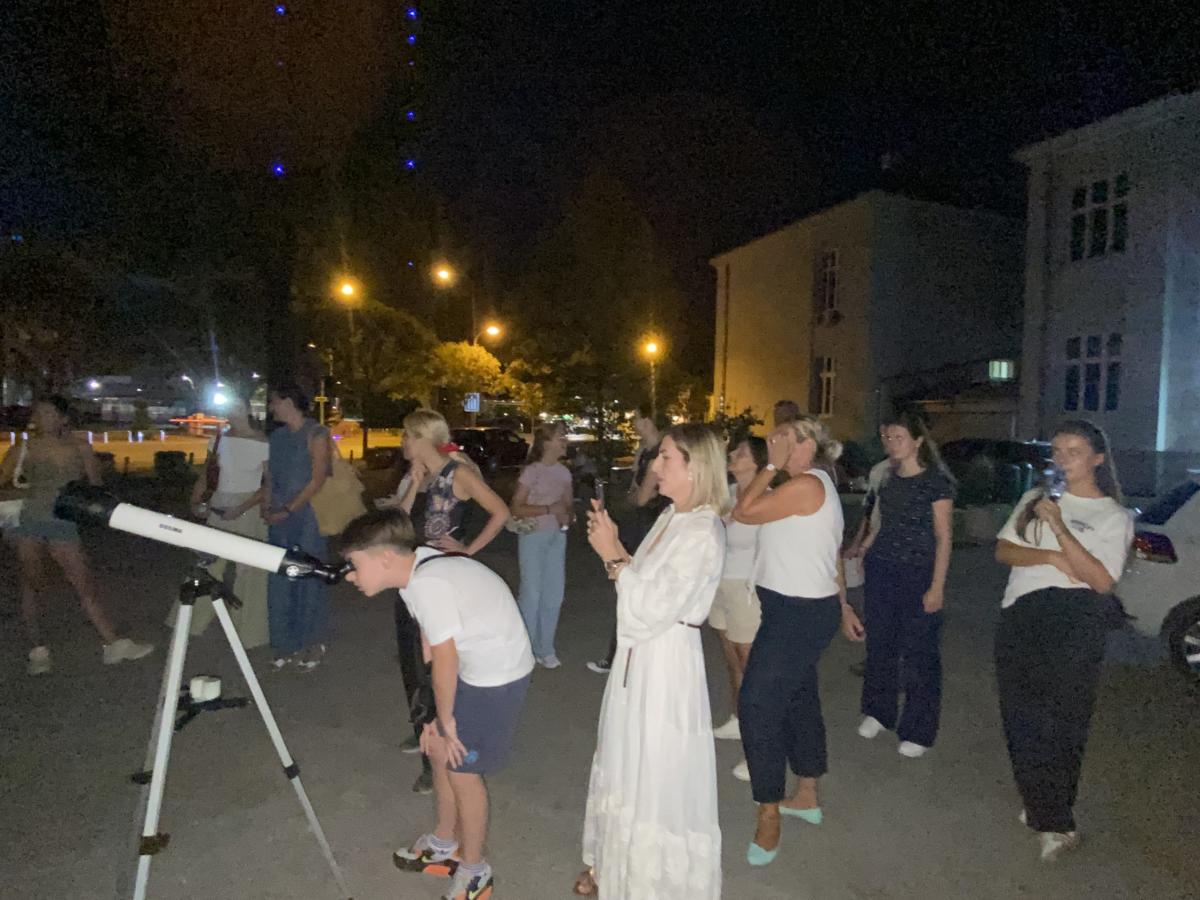
The physics workshop “Photon Hunters: How to Read Light from Space”, delivered by Assistant Professor Nemanja Rakić, attracted considerable interest. The workshop was particularly appealing because it was held in the evening. With the help of a telescope set up in front of the Faculty, students observed the night sky and had the opportunity to learn firsthand how light arriving from space carries information about distant celestial bodies.
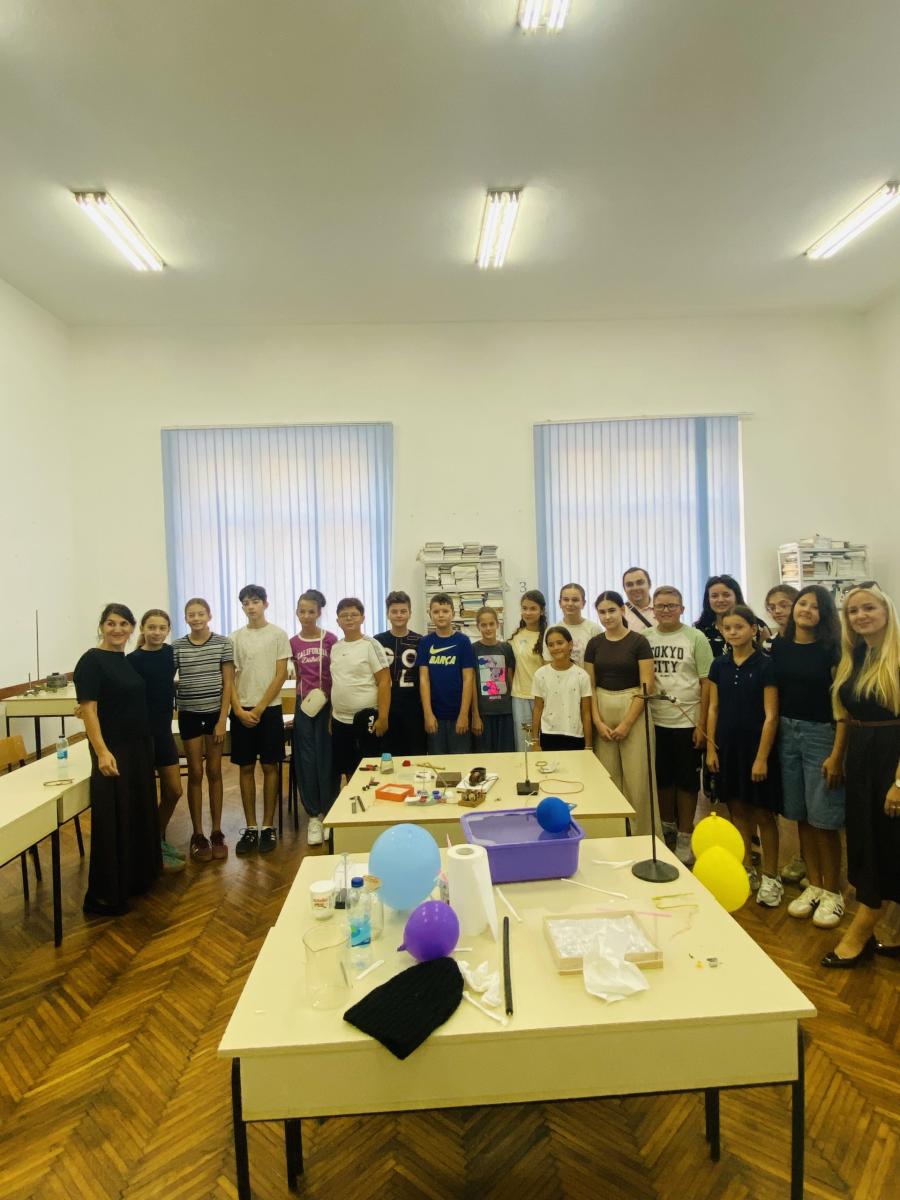
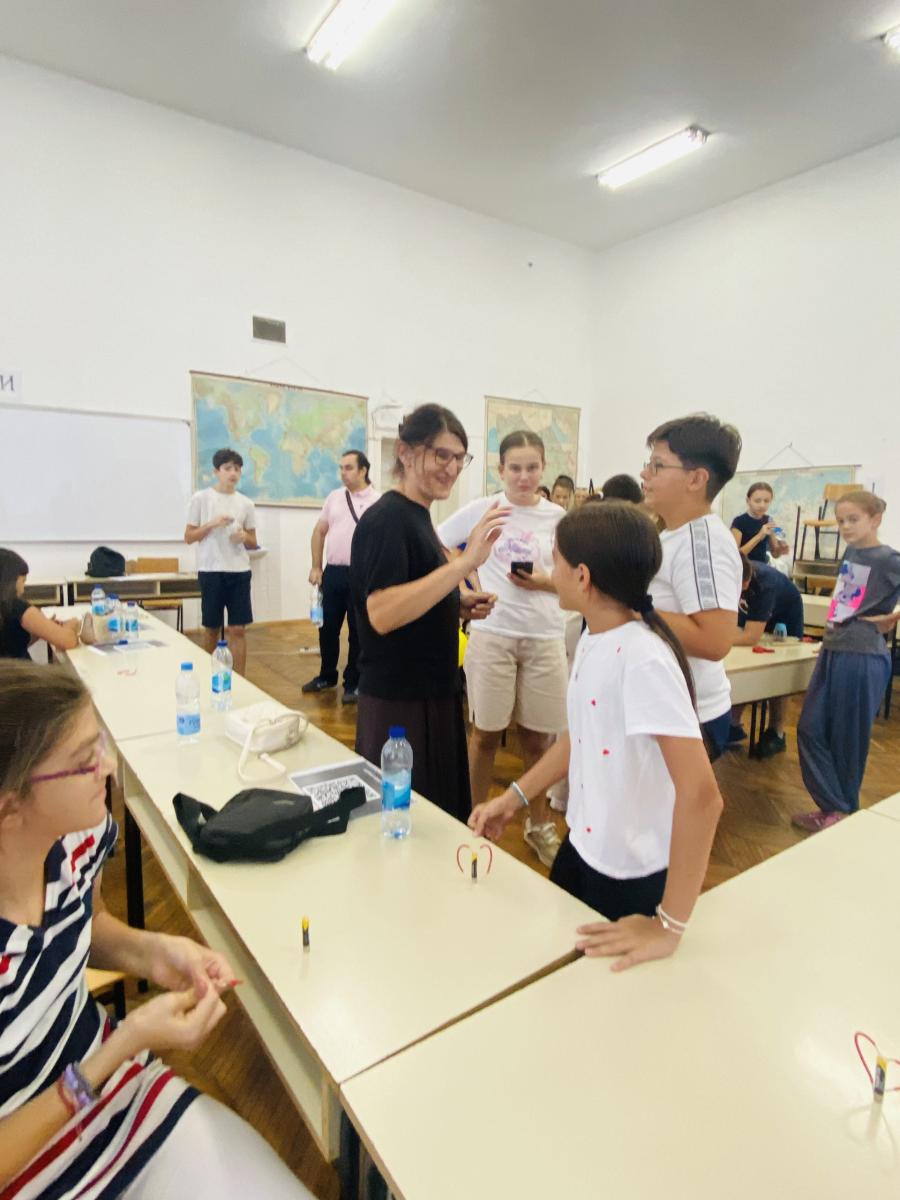
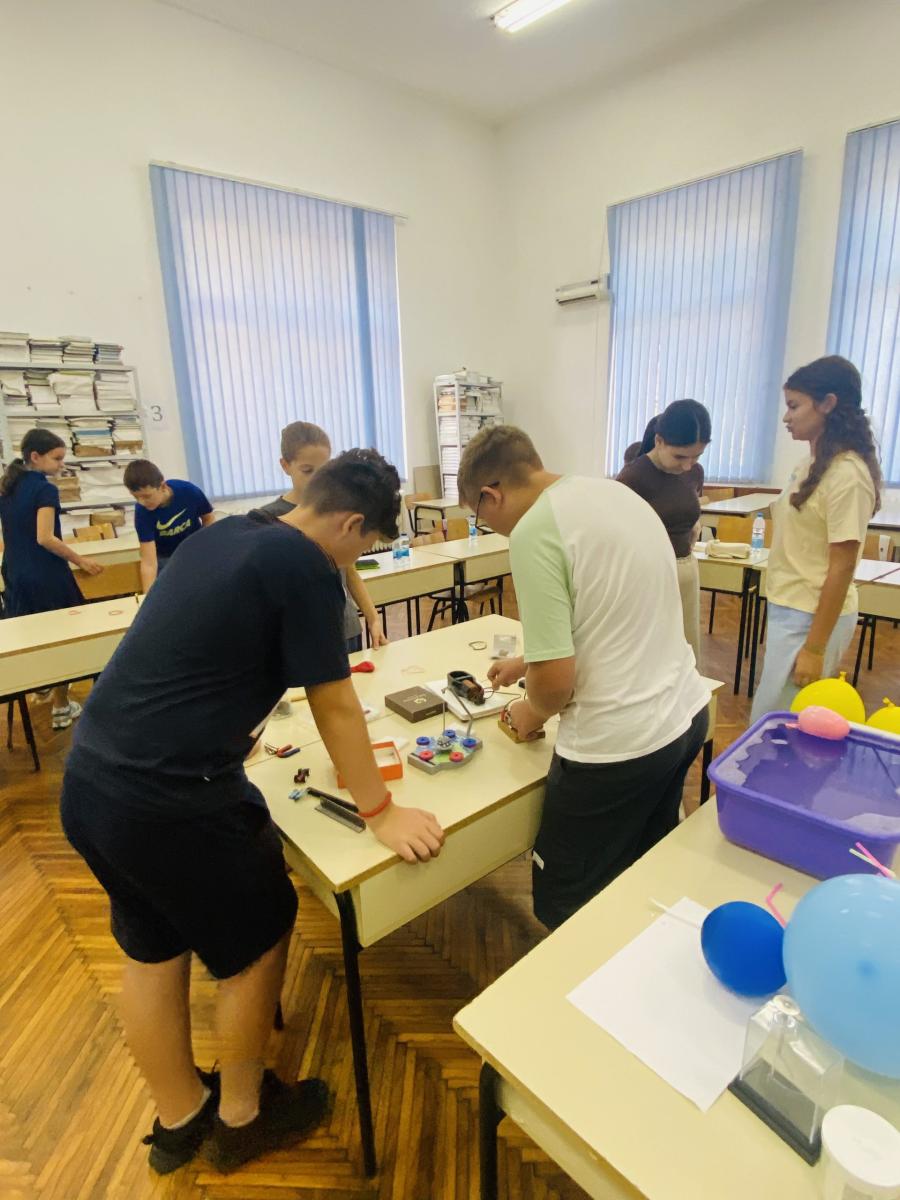
Professor Dušanka Marčetić prepared the workshop “Let’s Take a Look into Physics II”, in which primary school students explored how physical laws manifest themselves in phenomena encountered in everyday life through a series of engaging experiments. The practical demonstrations and opportunity for direct participation made this workshop particularly interesting to the youngest camp participants.
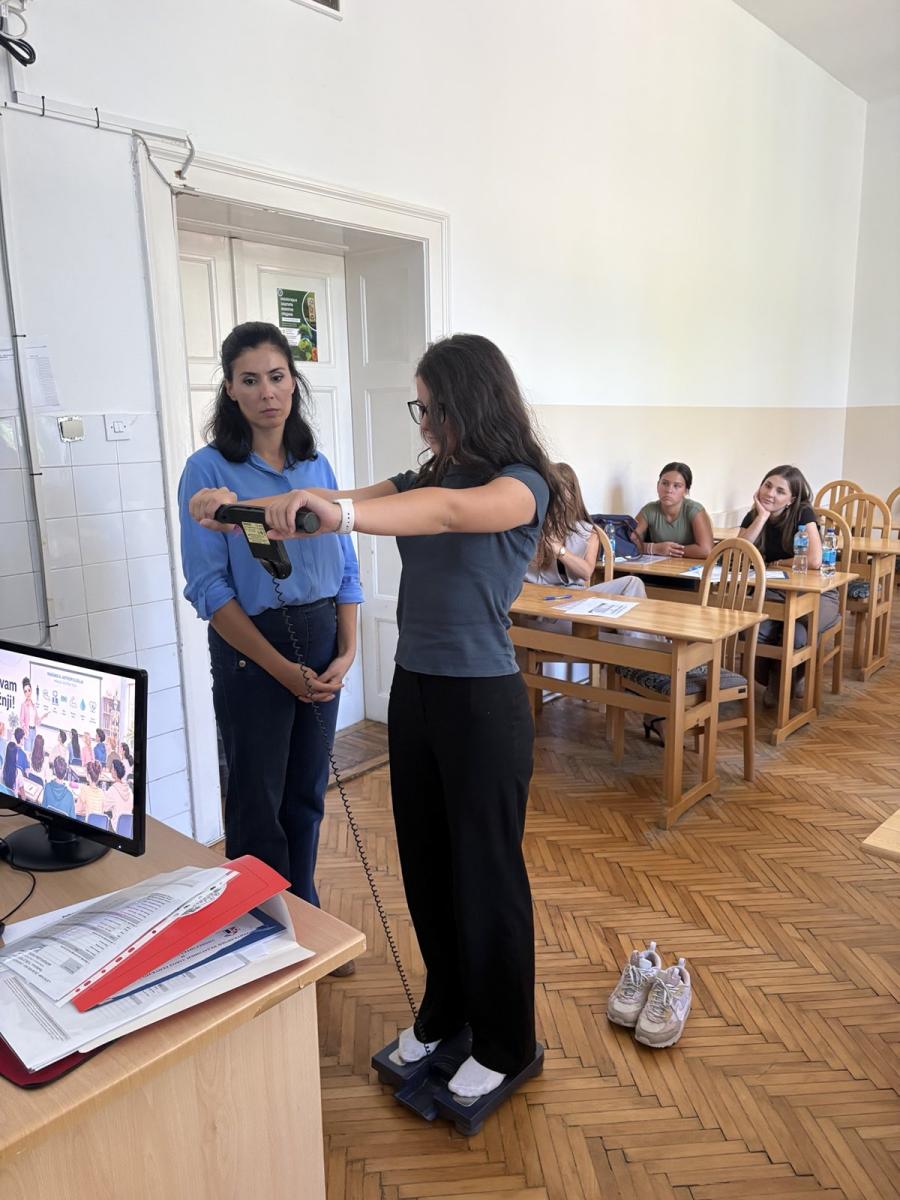
At the workshop “The Body Under the Microscope”, delivered by Dr Maja Šibarević, Senior Teaching Assistant, students were introduced through practical measurements to the basics of biological anthropology and the importance of monitoring body composition and health indicators. They had the opportunity to determine basic anthropometric indicators, including body mass index, and to analyse body composition using bioelectrical impedance, gaining insight into body fat percentage, muscle mass, and basal metabolic rate.
Students also had the opportunity to explore practical aspects of geography. Professor Aleksandra Petrašević delivered the workshop “Orienteering Challenge – Mission ‘Find the Target’”, during which participants learned how to navigate in space and in nature using different orientation techniques. Part of the activity was held outside the Faculty premises, in Mladen Stojanović Park, adding an extra dynamic element to the workshop and allowing students to immediately apply the knowledge they had acquired in practice.
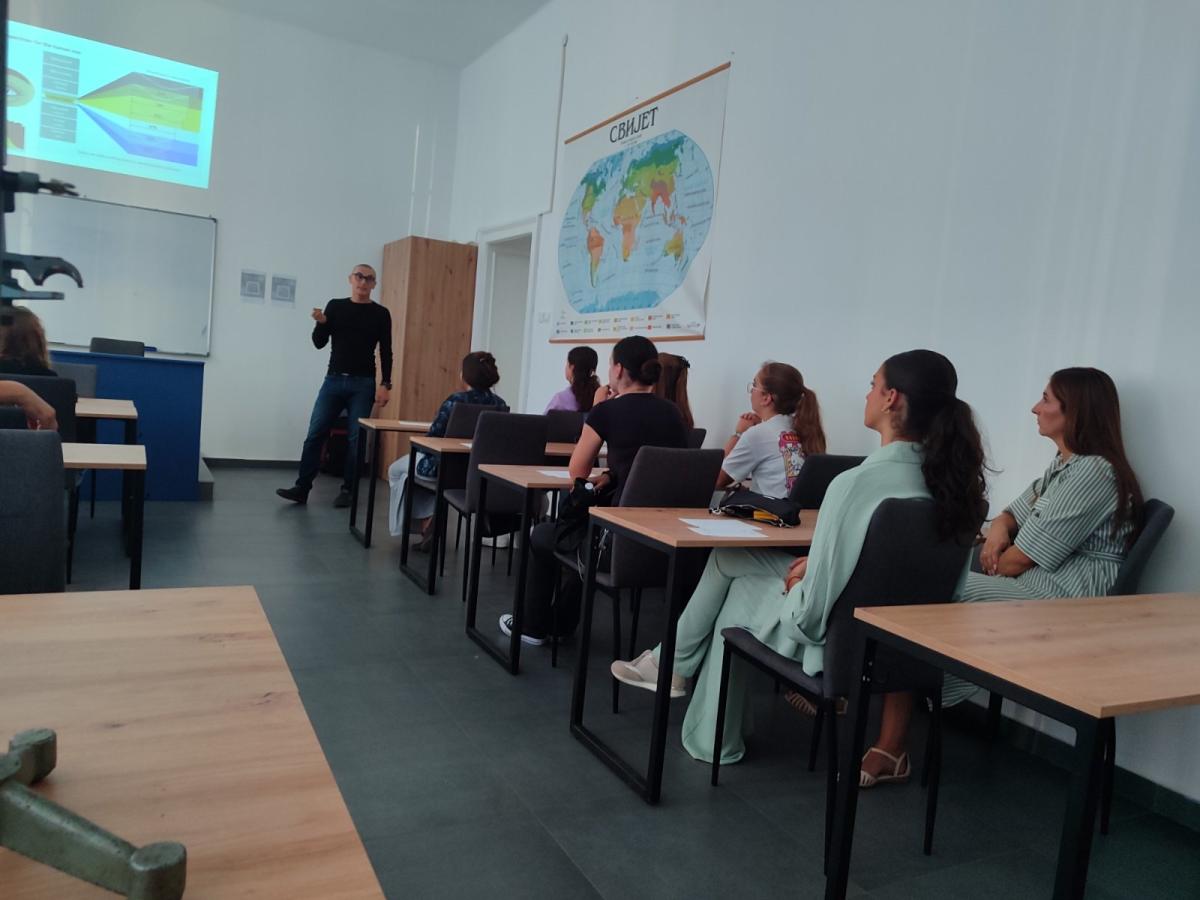
The workshop “Earth in Motion”, delivered by Assistant Professor Novica Lovrić, introduced students to the Earth’s movements and their influence on phenomena that we observe every day. Through engaging examples and interactive activities, participants explored the rotation and revolution of the Earth, their duration, and their connection with the alternation of day and night, the changing of the seasons, and the measurement of time.
Rather than relying solely on traditional learning, participants had the opportunity throughout the camp to explore independently, ask questions, conduct experiments, and test scientific principles through practical work. The variety of workshops enabled them to view the natural sciences from different perspectives and recognize their interconnectedness in phenomena encountered in everyday life.
Text by: Doc. Dr Dino Hasanagić